Tax Preparation
File With Confidence, Not Just on Time.
Business tax preparation means your return is accurate, complete, and filed correctly — built on records that hold up, not reconstructed at the last minute.
How a Return Actually Comes Together
01
Records
Gather and organize the financial records the return depends on.
02
Prepare
Prepare the return based on those records and the business's structure.
03
Review
Review for accuracy and completeness before anything is filed.
04
File
File the return — federal and Colorado state requirements together.
05
Next Year
Carry what was learned into next year's records, not just this year's filing.
None of that depends on scrambling in April. It depends on the records being ready well before the deadline arrives.
Preparation Handles What Happened. Strategy Shapes What's Next.
Tax Preparation
Accurate, compliant filing based on the year that already occurred. Necessary every year, and the foundation everything else sits on.
Tax Strategy
Planning decisions before they happen — timing, structure, compensation — so next year's return reflects choices made on purpose, not after the fact.
What EFS Typically Needs to Prepare a Return
- Bookkeeping records and financial statements for the year
- Payroll records, if the business has employees
- Prior-year returns, for a new client
- Documentation for major purchases, asset sales, or entity changes
- Bank and loan statements relevant to the business
- Any notices or correspondence from tax authorities
The cleaner and more current the records, the more the process is actual preparation rather than reconstruction. Returns are prepared for federal filing and Colorado's state requirements together, not as a separate afterthought.
Who This Is For
This is built for established businesses — S corporations, partnerships, LLCs, and multi-entity structures — where the filing has enough moving parts that a returning preparer who already understands the business is worth more than a seasonal, one-time filer. Complexity often shows up as multiple entities, a change in structure, significant asset purchases or sales, or a business that has simply outgrown a do-it-yourself approach.
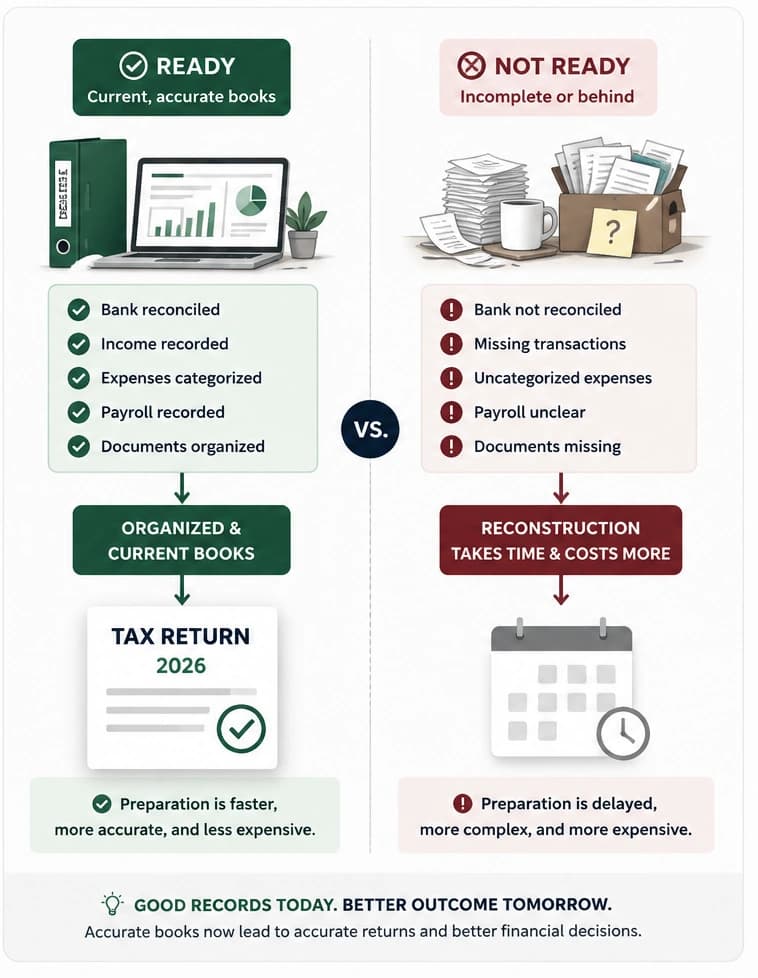
Preparation Starts With the Records
The quality of a tax return depends heavily on the quality of the bookkeeping behind it. Current, accurate books mean preparation is straightforward; books that are incomplete or behind mean time and cost go into reconstruction before the actual return can even start.
That's why accurate, current books make preparation faster, more accurate, and less expensive to produce.
A return is only as good as the records behind it.
Not sure if your records are ready for tax season? Talk it through with EFS
Where This Fits
Preparation and tax strategy work together throughout the year rather than meeting for the first time when a return is due. Payroll accuracy, business advisory decisions, and fractional CFO planning all eventually flow into the same return, which is why EFS treats preparation as connected to the rest of the relationship rather than a standalone, once-a-year service.
For many business structures, the business return directly affects the owner's personal return — pass-through income, in particular, means the two are less like separate filings and more like two views of the same picture. Coordinating both is part of doing either one well.
Pricing
Tax preparation is typically priced around the complexity of the return — entity type, number of entities, and how complete the underlying records are — rather than a flat fee that treats every business the same. EFS's pricing page outlines how that complexity fits into the bigger picture.
Common Questions
What is business tax preparation?
Business tax preparation is the process of accurately compiling a business's financial activity for the year into the tax return its structure requires, and filing it correctly and on time. It reports what happened — it doesn't plan for what happens next, which is the role tax strategy plays.
What's the difference between tax preparation and tax planning?
Preparation reports and files the year that already happened. Planning, or tax strategy, looks at decisions before they happen, while there's still a choice to make. Most established businesses need both, working together rather than as separate, disconnected services.
Does EFS prepare returns for S corporations, partnerships, and LLCs?
Yes. Each of these structures has different filing requirements, which is one reason a preparer who already knows the business's structure and history is worth more than a new preparer starting from scratch each year.
What documents are needed to prepare a business tax return?
Generally: the year's bookkeeping records and financial statements, payroll records if the business has employees, prior-year returns for a new client, documentation for any major purchases or entity changes, and any correspondence from tax authorities. The exact list depends on the business.
When are business tax returns due?
Deadlines vary by entity type and can shift with extensions or changes in tax law, so this page won't state specific dates that could be wrong for your situation. EFS tracks the deadlines that actually apply to your business as part of the engagement.
How does the quality of my bookkeeping affect tax preparation?
Directly. Current, accurate books mean the return can be prepared efficiently and correctly. Books that are incomplete or behind usually mean reconstruction work has to happen before preparation can even begin, which costs more time and money than staying current would have.
Ready to Get This Year's Return Handled?
A short conversation is enough to understand what your business needs this year, and whether tax strategy should be part of the conversation too.